Egusi vs Ogbono Soup: A Side-by-Side Guide from Albany, NY
Ufondu Kitchen October 26, 2026
Egusi vs ogbono soup is the first real decision most people face at a West African restaurant, and it deserves more than a coin flip. Both are Nigerian classics. Both arrive with a swallow. Both cost $13.99 at Ufondu Kitchen, which sits at Colonie Center Mall by the Regal Cinema entrance, opposite Five Guys in Albany, NY. The difference comes down to the seed, the texture, and how each soup behaves once it reaches the table.
Egusi vs Ogbono Soup: The Short Answer
Egusi is ground melon seed. Ogbono is ground wild mango seed, sometimes called ariyo or Irvingia. Egusi thickens a soup into soft, grainy crumbles that sit in the broth and give you something to chew. Ogbono melts into a glossy, slippery draw that coats the back of the spoon. If you like texture and a nutty, savory bite, egusi is your bowl. If you like a silky soup that slides down with the swallow, choose ogbono. Neither one is a sauce you pour over rice. Both are meant to be scooped with a small ball of swallow, pressed against the side of the bowl, and eaten in one motion, so the soup and the starch arrive together.
What Egusi Soup Tastes Like
Our egusi starts with melon seeds ground to a coarse meal, then cooked in palm oil with crayfish, locust beans and leafy greens. Like all our soups, the pot itself is cooked without meat, and your protein is folded in fresh when you order. The seeds toast in the oil, which is where that deep, roasted, almost peanut-like flavor comes from. It is a hearty soup, closer to a stew in body, and the greens keep it from feeling heavy. Ask for it with eba or fufu and you get a firm, slightly sour swallow that stands up to the crumble without falling apart. The greens change a little depending on what the kitchen has that morning, usually spinach or ugu, and the protein is your call: assorted meat, beef, goat, chicken, fish, or no meat at all. So the bowl is never exactly the same twice.
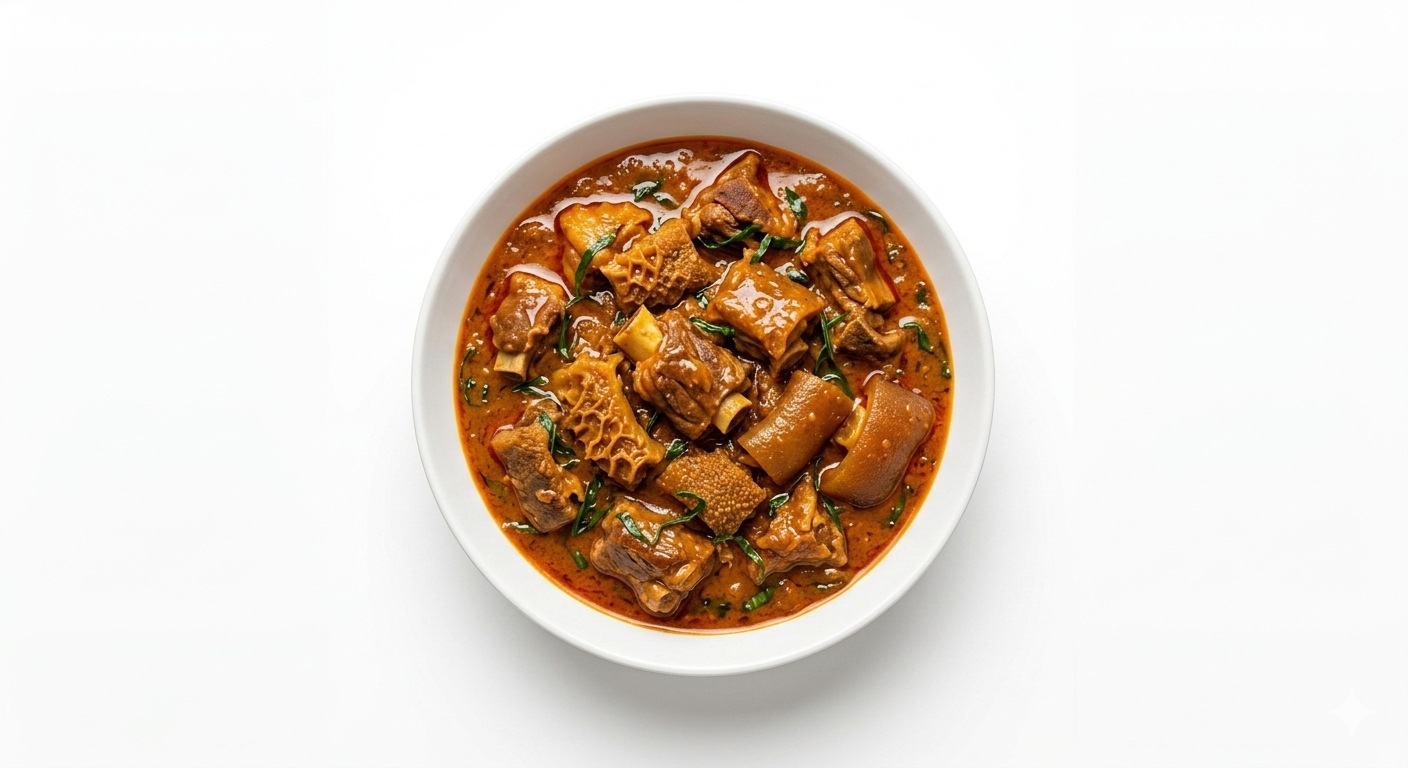
Ogbono soup, thickened by ground wild mango seed, finished to order with assorted meat and greens.
What Ogbono Soup Tastes Like
Ogbono is milder and rounder. The ground seed carries a faint sweetness and a slow, earthy finish, and it thickens the broth without flour, cornstarch or any other shortcut. We cook ours with palm oil, crayfish and leafy vegetables, then fold in assorted meat or the protein of your choice when you order. The soup keeps drawing long after it leaves the kitchen, so it stays glossy to the last spoonful. Because that draw is so slick, ogbono pairs naturally with softer swallows: fufu, plantain fufu, semolina or wheat. First-timers often find it gentler than egusi, especially while they are still building a tolerance for pepper.
How We Serve Both Soups in Albany
Every soup on our menu comes as an eight ounce bowl with your choice of swallow, and both egusi and ogbono are $13.99. The swallow list runs from fufu at $7 and eba, semolina or wheat at $6.50 to amala at $7.50, plantain fufu at $7.43, foutou at $7 and placali at $6.50. Tell the counter how much heat you want and we will adjust the pepper. Both soups are on the line every day from 11:00 AM to 10:00 PM, and both travel well for takeout and delivery through DoorDash, Uber Eats, Grubhub or our own site. If you have a fish or shellfish allergy, mention it when you reach us at 518.977.3014, because crayfish is central to both recipes. Feeding a crowd, we pack either soup in party trays with the swallow on the side, which is how a lot of Albany families handle Sunday lunch after church.
The honest answer to egusi vs ogbono soup is that most regulars keep both in rotation. Start with the egusi if you want something to chew, or the ogbono if you want something silky, and let the swallow decide the rest. Order at ufondukitchen.com or at the counter, and we will have it ready.